16 months into a new system, they stopped going at it alone.
Client Win — Aspire Implementation
Dinsmore Landscape, a 120-person commercial landscape company in Campbell, California. With Clayton Nicholson as President. On Aspire implementation, operational accountability, and ongoing support.
~120 employees
Commercial & High-End Residential
San Francisco Bay Area
On Aspire since Jan 2021
4 yrs
Still in the huddle, long after implementation wrapped
Dinsmore brought 212 in to rescue a stalled implementation in 2022. The implementation work wrapped years ago. Dinsmore still keeps 212 on retainer for reporting, templates, and a second opinion on system decisions.
About Dinsmore Landscape
Dinsmore Landscape is a family-owned commercial landscape company that has served the San Francisco Bay Area since 1983. From its home base in Campbell, the company handles maintenance, irrigation, enhancements, and construction for commercial properties, along with maintenance and design-build for high-end residential clients.
Maintenance is the largest department by headcount, while revenue splits roughly 50/50 between maintenance and construction. The team of about 120 works out of 2 locations managed under a single regional branch.
Company Profile
Industry Segment
Commercial Maintenance / Irrigation / Enhancements / Construction + High-End Residential
Team Size
~120 employees
Location
San Francisco Bay Area
Markets Served
Commercial & High-End Residential
Years on Aspire
5 (since 2021)
Services with 212
Aspire Implementation, Pricing & Item Catalog, SOP Library, End-of-Month Processes, Reporting, Ongoing Support
The Challenge
“We were paying more for software and running into the same walls.”
Dinsmore had already changed software once. The team never fully onboarded its previous platform, so the move to Aspire in 2021 was supposed to be a fresh start. Implementation moved quickly and covered only so much. More than a year later, the company was paying more and still hitting the same limitations it had blamed on the old system. Clayton and his team looked inward and landed on an honest answer: this was an internal problem, and the software alone was never going to solve it.
Aspire was generating and tracking proposals and not much else. Maintenance contracts were not tracked accurately. Some crews clocked in to work tickets and some did not. Job costing lived in large buckets, barely broken out by division. Underneath all of it was a question of ownership. Nobody had clear responsibility for each piece of the rollout, so phases were left half-finished while the team moved on to the next one, at a size where the business badly needed an operating framework.
There was a hidden cost too. Dinsmore had always priced on an hourly rate, and that approach did not translate cleanly into the new system. Markup entry errors meant the company was charging less for some labor items than it had before the switch, without knowing it.
Clayton found 212 by luck, and in his words, 16 months too late. He talked with 2 firms offering Aspire support. After his first call with David Arnold, the choice was clear. 212 dug in, asked good questions, and brought the operational background he wanted in that seat.
The Approach
What 212 did.
The engagement began in 2022 with a hard look at Dinsmore’s setup, team, and systems, followed by weekly working sessions with division managers led by David Arnold. It continues today as ongoing support.
Rebuilt the Aspire setup around the field, so crews had real work tickets to clock into and maintenance contracts were tracked accurately
Audited the item catalog, pricing, markups, and service costs, and corrected entry errors that had Dinsmore undercharging on several labor items
Clarified the org chart and assigned true ownership of each part of the rollout to division managers
Ran weekly sessions with visible targets, holding each step until it was complete before moving to the next
Deployed 212’s SOP library in Manifestly, tailoring prebuilt workflows to Dinsmore’s people and roles
Built construction and enhancement kits, templates, and purchasing setup so estimates could be compared against actuals
Installed end-of-month protocols and checklists that feed dashboards and monthly reports for operations, purchasing, inventory, and leadership
Continues as an ongoing partner for report builds, template changes, and guidance as the system evolve
The 212° Stages
How the work unfolded.
180°
Warming Up — Foundation
From gut feel to real numbers
The early weeks were homework. Division managers sat in each session, took the week’s changes back to their teams, and reported back. If something was not finished, the work did not move forward. A couple of months in, the numbers started to show up. Estimate-versus-actual job costing, captured through the team’s daily work, replaced the old division-level buckets. Decisions started coming from data instead of instinct. “I now know why I’ve been feeling the headaches I’ve been feeling,” Clayton said.
200°
Building Momentum — Accountability
No more finger-pointing
With time logs and a history of events behind every job, internal conversations changed. “We’re not getting into finger-pointing situations, because there’s the time log and the history of events,” Clayton said. As the friction came out of daily use, so did the team’s fear of the new system. 212 kept pushing Dinsmore out of its comfort zone, favoring the right way over the fast way. “If you take a shortcut at the start,” Clayton said, “it ends up causing issues, confusion, and errors down the line.”
212°
Boiling Point — Independence
In the huddle, running the plays
4 years in, Dinsmore runs on end-of-month protocols, dashboards, and monthly reports for operations, purchasing, inventory, and leadership. The team knows the system well enough to make its own calls, including choosing not to use a feature after weighing it. A new leader who recently joined from a company that had used Aspire for 5 years, mostly for a couple of functions, was surprised by how much of the system Dinsmore puts to work. 212 remains part of the team, in the huddle and running some of the plays. When someone mentions filing a software support ticket, Clayton’s advice is simple: go to the Arnolds.
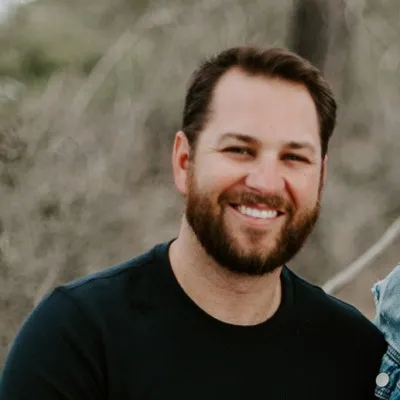
“Unless you’ve implemented software in a landscape company before, you don’t know what you don’t know. We wasted 3 years of data trying to tackle it on our own. Anyone implementing Aspire is kind of silly not to take advantage of 212, unless you’re willing to get in your own way and learn the hard lessons.”
Clayton Nicholson, President of Dinsmore Landscape
From Our Side
What makes Clayton a great 212 client.
Clayton came to us with a stalled implementation and started by asking what his own team needed to change. He put his division managers in the room, let them own their piece, and held the line on finishing each step. He also pushes back, asks why, and makes his own calls, which keeps the work honest on both sides. That is how a project turns into a partnership that is 4+ years strong.
— The 212 Team
Want to be a client win?
If you're a landscape business owner ready to do the work, we'd like to hear what you're up against. The first conversation is a 30-minute call with David Arnold.
Two Twelve Advisors
Helping landscape companies install the financial clarity, operational structure, and accountability that turn a hardworking business into a profitable one.
Company
Consulting Services
© 2026 Two Twelve Advisors. All rights reserved.